DeepSeek vs. Gemini vs. OpenAI: Which AI Model is Best for Your App?
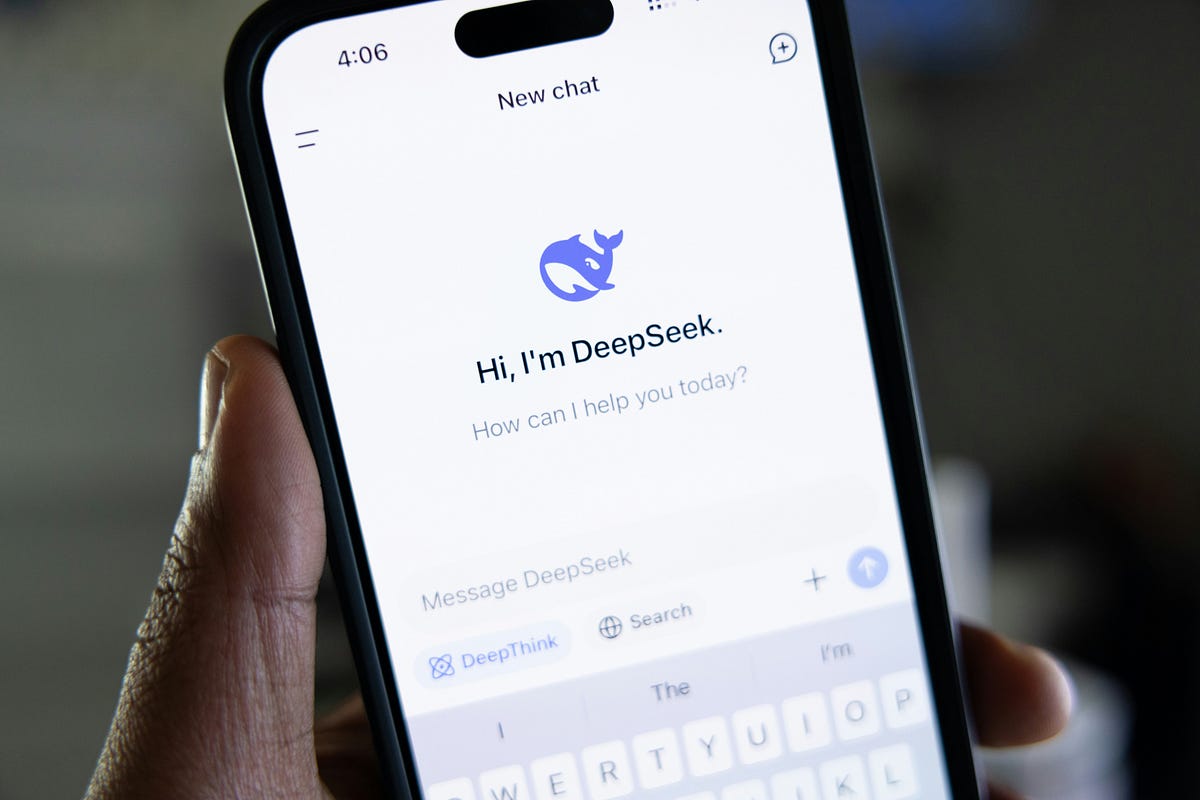
Choosing the right AI language model (LLM) for your application development project is crucial for success. With powerful options like DeepSeek, Google’s Gemini, and OpenAI’s models, it can be challenging to determine the best fit. This guide breaks down a comparative analysis of these leading LLMs, focusing on real-world application development scenarios.
Real-World Testing: Three Apps, Three Models
To understand how these models perform in practice, a recent experiment involved building three distinct applications:
- Mood Tracker: This app focused on data visualization and managing application state.
- API-Driven Recipe Generator: This project tested the ability to integrate with external APIs.
- Whack-a-Mole Game: This app assessed real-time interaction and logic handling.
Performance Results
Across 200 requests, DeepSeek achieved the highest success rate in completing tasks end-to-end (77.66%), followed by OpenAI (73.50%) and Gemini (71.24%). While all models produced functional applications, their strengths and weaknesses varied significantly. Gemini showed the fastest response times, but DeepSeek excelled in overall task completion.
Key Differences: Architecture and Cost
- DeepSeek: Uses a Mixture-of-Experts (MoE) architecture. This allows it to activate only a small portion of its total parameters for each query, making it cost-effective. It’s also open-source, offering greater flexibility and control.
- OpenAI: Employs dense transformer networks. Known for high accuracy on benchmarks, especially in areas like mathematical reasoning. However, it’s a closed-source model with a higher cost per token.
- Gemini: Features a large context window, making it ideal for processing large documents. It also offers native integration with Google services through its API.
Code Quality and Practical Considerations
The experiment revealed differences in code quality:
- DeepSeek: Tends to generate concise code, but may sometimes require additional error handling for edge cases.
- OpenAI: Produces more robust code with built-in error handling, although it can sometimes be overly complex.
- Gemini: Prioritizes speed, which may sometimes come at the expense of robustness, requiring more manual code review.
Cost and Vendor Lock-In
Cost is a major factor. Gemini offers the lowest cost per million tokens, making it attractive for startups and MVPs. DeepSeek’s open-source nature eliminates vendor lock-in and allows for on-premise deployment. OpenAI, while more expensive, justifies its cost with lower error rates in critical applications.
Making the Right Choice
The ideal LLM depends on your project’s specific needs:
- For rapid prototyping and cost-sensitivity: Gemini is a strong contender.
- For open-source projects and long-term cost control: DeepSeek offers significant advantages.
- For mission-critical applications requiring high accuracy: OpenAI may be the best choice, despite the higher cost.
The LLM landscape is constantly evolving. New models are emerging, and developers should prioritize a flexible, modular approach to AI integration.
コメントを残す