"Stray Dog (1949): 75 Years Later – Kurosawa’s Overlooked Noir Masterpiece"
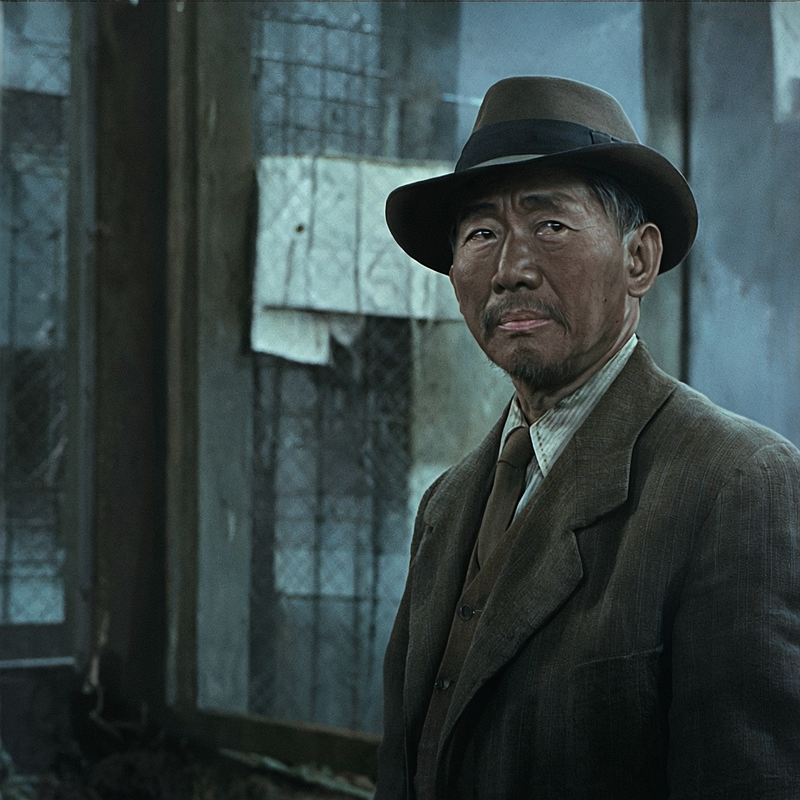
When we think of Akira Kurosawa, we usually think of sweeping samurai epics like Seven Samurai or Rashomon. But tucked away in his remarkable filmography lies a dark, gritty masterpiece that often gets overlooked: Stray Dog (Nora inu), released in 1949. This film, celebrating its 75th anniversary, is one of Kurosawa’s early yet significant works — a psychological noir thriller that not only showcases the director’s evolving genius but also serves as a compelling commentary on post-war Japan.
And while it may not receive the same level of recognition as some of his later works, Stray Dog stands as an essential viewing for cinephiles, filled with intensity, moral complexity, and Kurosawa’s unmistakable humanism.
The Plot: A Simple Story with a Complex Soul
At first glance, the plot of Stray Dog seems simple enough. It’s a hot summer in post-war Tokyo, and rookie detective Murakami (played by the legendary Toshiro Mifune) has his gun stolen by a pickpocket while on a crowded bus. Desperate to recover it, Murakami embarks on an exhaustive, feverish search through the underbelly of the city. But when the stolen gun starts being used in violent crimes, Murakami’s personal guilt spirals, and what was once a simple search for a lost firearm becomes a quest for redemption.
What elevates Stray Dog beyond a typical crime drama is Kurosawa’s masterful treatment of Murakami’s moral struggle. The film explores the thin line between law enforcement and criminality, showing us how Murakami’s internal torment mirrors the very criminals he’s hunting. In fact, Stray Dog is often seen as an early precursor to Kurosawa’s later masterpiece, High and Low (1963), in the way it explores social issues through a crime narrative.
Kurosawa’s Vision: A Snapshot of Post-War Japan
Set against the backdrop of a sweltering Tokyo summer, Stray Dog is as much a reflection of post-war Japan as it is a noir thriller. The city is still recovering from the devastation of World War II, and the scars of the conflict are visible in almost every frame. Kurosawa masterfully uses Tokyo’s war-ravaged streets, overcrowded markets, and makeshift dwellings to create a setting that feels both haunting and alive.
At the time of its release, Japan was undergoing a period of reconstruction, but Kurosawa doesn’t let us forget the toll that war has taken on the people. The characters in Stray Dog live in a world of scarcity, where black-market deals, poverty, and rising crime have become the harsh realities of daily life. The heatwave that runs throughout the film acts as a metaphor for the oppressive, simmering tensions of a society that is trying to rebuild itself amid desperation.
In a sense, Murakami’s lost gun represents more than just a physical object — it’s a symbol of the chaos and unpredictability of post-war Japan, where a single lost item can cause catastrophic consequences. Kurosawa’s message is clear: survival in this world demands compromise, but those compromises come with moral costs.
Toshiro Mifune and Takashi Shimura: A Dynamic Duo
Stray Dog marks one of the many collaborations between Kurosawa and Toshiro Mifune, the actor who would become synonymous with the director’s greatest films. Mifune’s portrayal of Murakami is electrifying — he captures the rawness of a young detective, filled with guilt and frustration, chasing a criminal while seemingly running away from his own fears.
Opposite Mifune is Takashi Shimura, another Kurosawa regular, who plays Sato, an older, wiser detective who becomes Murakami’s mentor. The dynamic between the two is a highlight of the film — Murakami’s restless, youthful determination is balanced by Sato’s more pragmatic, seasoned outlook. Through their relationship, Kurosawa explores generational conflict, the weight of experience, and the different ways people cope with guilt and responsibility.
The chemistry between Mifune and Shimura elevates the film beyond just a detective story. Their evolving relationship speaks to a larger theme of mentorship, duty, and moral reckoning, something Kurosawa would return to time and again in his career.
The Film Noir Aesthetic: Kurosawa’s Mastery of Mood
Stray Dog is often described as one of the first Japanese film noirs, and it’s easy to see why. Kurosawa employs many of the genre’s hallmarks: low-key lighting, morally ambiguous characters, and a protagonist grappling with his own inner demons. The rain-soaked streets, the suffocating heat, the grimy underworld — all of these elements contribute to the film’s noir aesthetic.
Yet, Kurosawa infuses the genre with his unique directorial touch. One of the film’s most famous sequences is Murakami’s silent, eight-minute trek through the backstreets of Tokyo as he goes undercover in search of clues. The scene is masterful in its execution — there’s no dialogue, just a series of shots that immerse us in the world Murakami is navigating, giving the viewer a vivid sense of the desperation that defines this post-war reality.
Kurosawa’s use of sound is equally striking. The oppressive heat is palpable through the constant hum of cicadas, amplifying the tension. In many ways, the city itself becomes a character in the story, its atmosphere weighing down on both the audience and the characters as they try to make sense of a broken world.
Why Stray Dog Deserves a Second Look, 75 Years Later
Seventy-five years after its release, Stray Dog remains a vital, relevant work. Kurosawa’s exploration of guilt, crime, and the moral struggles of individuals within a broken society feels just as timely today as it did in 1949. It’s a film that wrestles with complex emotions and offers no easy answers — but that’s exactly what makes it such a rewarding experience.
While Kurosawa’s later works like Ran and Yojimbo may command more attention, Stray Dog stands out as a hidden gem in his body of work. It showcases the early brilliance of a filmmaker who was still honing his craft but already displaying the trademarks that would define his legendary career: deep empathy for his characters, an eye for visual storytelling, and a desire to grapple with the big questions of life and society.
So, if you haven’t watched Stray Dog yet — or if it’s been years since your last viewing — now is the perfect time to revisit this dark, gripping masterpiece. Seventy-five years later, it still has the power to leave you thinking long after the credits roll, a testament to Kurosawa’s genius and the lasting impact of his vision.
Final Thoughts: Kurosawa’s Timeless Mastery
As we celebrate the 75th anniversary of Stray Dog, it’s a reminder of just how versatile and brilliant Akira Kurosawa was as a filmmaker. While it may not have the epic scope of some of his later films, Stray Dog is a lean, powerful exploration of the human condition. In many ways, it’s a perfect example of Kurosawa’s ability to combine gripping narrative with profound social commentary.
If you’re a fan of noir, detective stories, or just great cinema in general, Stray Dog is a film that demands to be seen and appreciated. In a world that often feels just as chaotic and unpredictable as post-war Tokyo, Kurosawa’s masterpiece remains as relevant as ever.
コメントを残す